
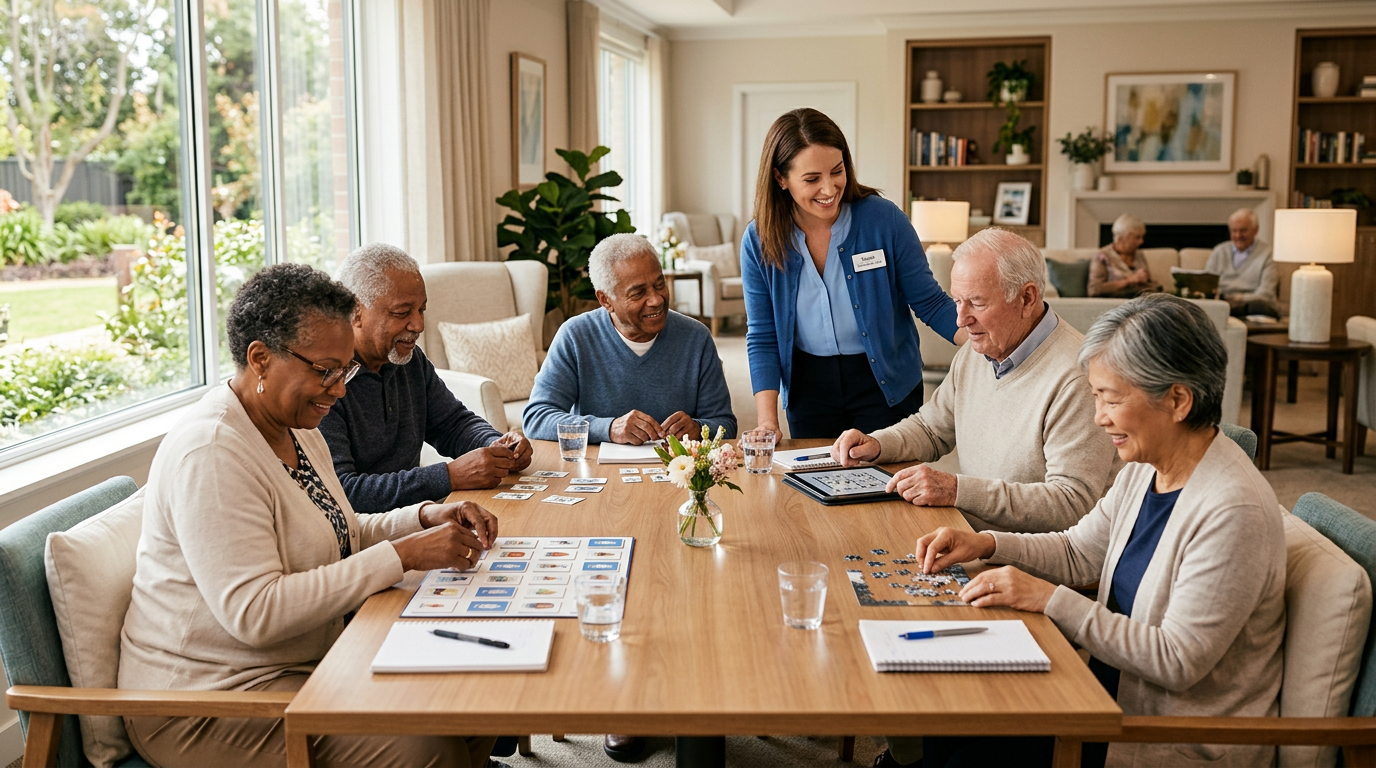
Consistent cognitive engagement requires structured scheduling, guided facilitation, and predictable delivery. While brain exercises for seniors can stimulate thinking, organized programming creates reliable participation across the entire community.
Structured cognitive engagement means organizing mental activities into scheduled, facilitated sessions that align with daily routines. It transforms isolated games into coordinated experiences that residents and staff can rely on. When we evaluate engagement models in senior living communities, we look beyond individual activities and focus on how the system supports consistent delivery. Communities exploring a more organized model often begin by reviewing structured options such as the senior living cognitive engagement programs designed specifically for community environments.
If participation varies from week to week, the problem may not be the activity itself. The problem may be the absence of structure.
Why Do Brain Games Alone Often Fall Short?
Brain games typically depend on voluntary interest. Some residents participate regularly, while others engage only occasionally. Without coordination, attendance can fluctuate, and engagement may remain limited to a smaller group.
Senior living communities serve residents with different abilities and comfort levels. An informal activity calendar may not provide equal opportunities for consistent involvement. When we assess community engagement, we focus on how activities are delivered, not just which activities are offered. Our approach emphasizes consistency and clarity in facilitation rather than relying solely on informal participation.
When communities embed brain exercises for seniors within a recurring framework, they move from occasional stimulation to predictable engagement. That distinction directly influences community-wide participation.
Structured Engagement Creates Operational Clarity
Organized programming creates operational clarity. Residents know when sessions occur. Staff understand how to guide them. Activities become familiar parts of daily life rather than isolated events.
Through our experience working with senior living communities, we have seen that structure strengthens reliability without removing familiar games.
Our programs focus on coordinated cognitive engagement designed specifically for community environments. We emphasize routine delivery, guided sessions, and integration into existing schedules. Leaders seeking clarity about implementation often explore how structured cognitive engagement in senior living communities supports daily operations.
Structure does not replace games. It gives them purpose, timing, and continuity.
What Is the Difference Between Casual Games and Organized Programming?
Communities that rely only on casual games often experience:
● Participation driven mainly by personal preference.
● Inconsistent attendance.
● Limited coordination across sessions.
● Uneven resident involvement.
Communities that use organized cognitive engagement programs typically achieve:
● Recurring scheduled sessions.
● Guided facilitation.
● Shared participation.
● Alignment with daily operations.
When we compare informal activity calendars with structured engagement systems, we consistently see that coordination makes the difference. If engagement depends heavily on individual enthusiasm, structure may be the missing element.
How Can Community Leaders Evaluate Their Current Model?
Community leaders can assess their model by asking:
● Do cognitive activities follow a dependable weekly routine?
● Does staff facilitation remain consistent?
● Do most residents participate regularly rather than occasionally?
● Can leadership clearly explain how engagement fits into daily operations?
● Does programming support community-wide involvement?
If several answers feel uncertain, reviewing a structured engagement framework can provide clearer direction. Many communities begin by examining how our senior living engagement approach integrates naturally into existing routines.
Will Structured Programming Disrupt Our Existing Routine?
Effective cognitive engagement should support established schedules rather than complicate them. When programming integrates naturally into daily operations and staff responsibilities, it strengthens participation instead of creating additional strain. We design our approach to align with daily workflows so that communities experience coordination rather than disruption.
Final Words
Senior living communities do not need to eliminate brain games. They need to organize them within a dependable system. Brain exercises for seniors produce stronger and more reliable engagement when delivered through recurring, guided sessions rather than isolated activities.
In most cases, games alone are not enough to sustain consistent community-wide participation. Structured cognitive programming provides clarity, coordination, and predictability. When we support communities in adopting an organized approach, we focus on creating a reliable engagement model that strengthens resident involvement and supports confident leadership decisions.
FAQs
1. What are brain exercises for seniors in senior living communities?
Brain exercises for seniors in a community setting include organized cognitive activities such as memory challenges, guided discussions, and structured thinking sessions. These activities work best when communities schedule and facilitate them consistently rather than offering them as occasional games. Learn how structured delivery works in our Senior Living programs.
2. Are brain games enough for senior living communities?
No. Brain games alone often lead to inconsistent participation because they depend on individual interest. Communities need structured scheduling, guided facilitation, and recurring sessions to create reliable engagement across residents. Organized programming strengthens participation and aligns activities with daily routines.
3. What is the difference between casual games and structured cognitive engagement?
Casual games happen occasionally and rely on voluntary interest. Structured cognitive engagement follows a predictable schedule, includes guided facilitation, and supports consistent participation. Communities that use organized programming see more stable involvement compared to informal activity calendars.
4. How can senior living leaders evaluate their cognitive engagement program?
Leaders can evaluate their program by asking:
● Do activities follow a weekly routine?
● Does staff deliver sessions consistently?
● Do most residents participate regularly?
● Is engagement clearly integrated into daily operations?
If these answers are unclear, a more structured model may provide stronger alignment.
5. Will structured brain exercise programs disrupt existing routines?
No. Effective structured programming supports existing schedules rather than complicates them. When cognitive sessions align with daily operations and staff responsibilities, communities experience greater coordination instead of added strain. The goal is clarity and consistency, not disruption.